Product Insights
Titanium vs Stainless Steel Watch Bands: A Wholesale Guide
Titanium vs stainless steel watch bands compared on weight, corrosion resistance, coating and cost, plus Grade 1 titanium test data and sampling terms.
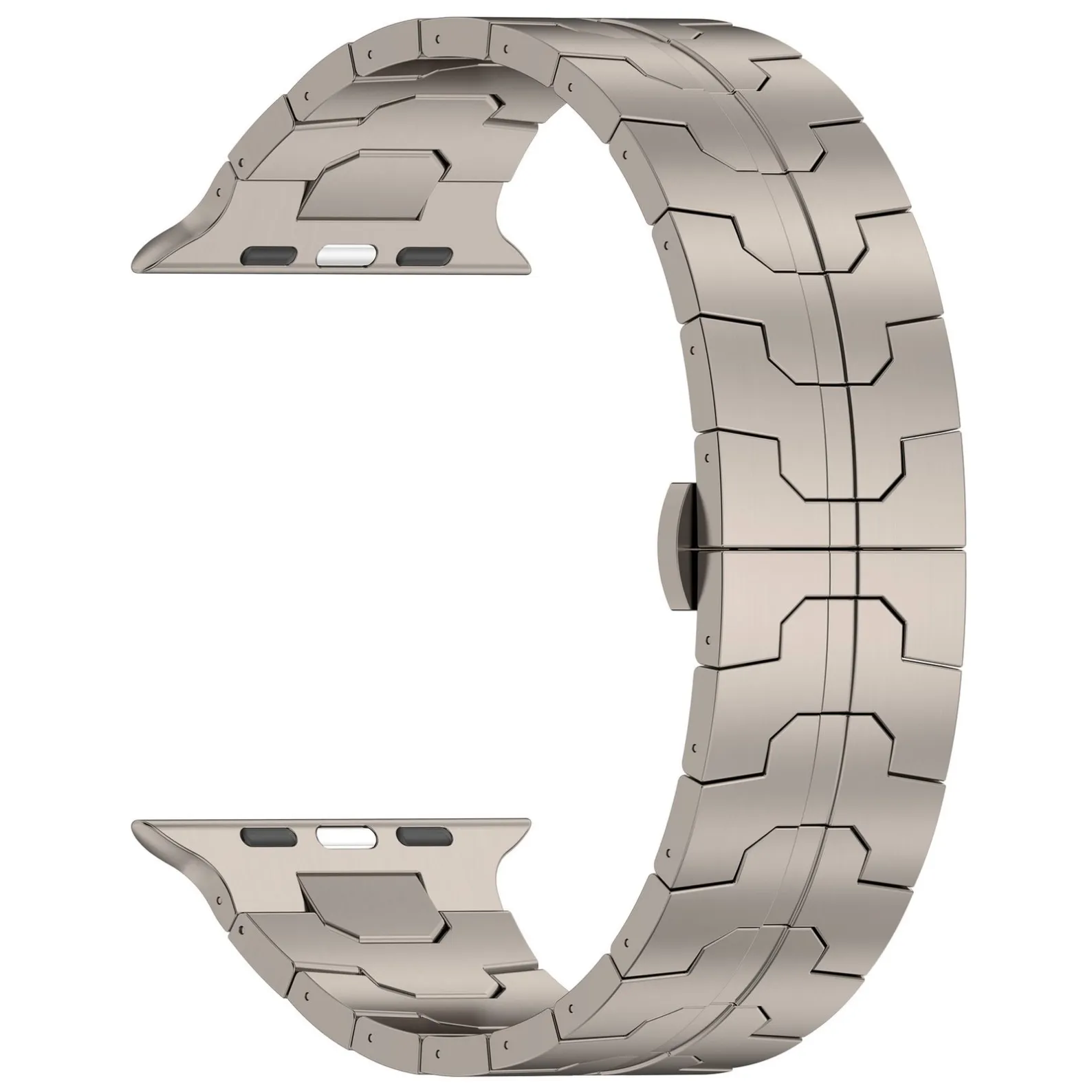
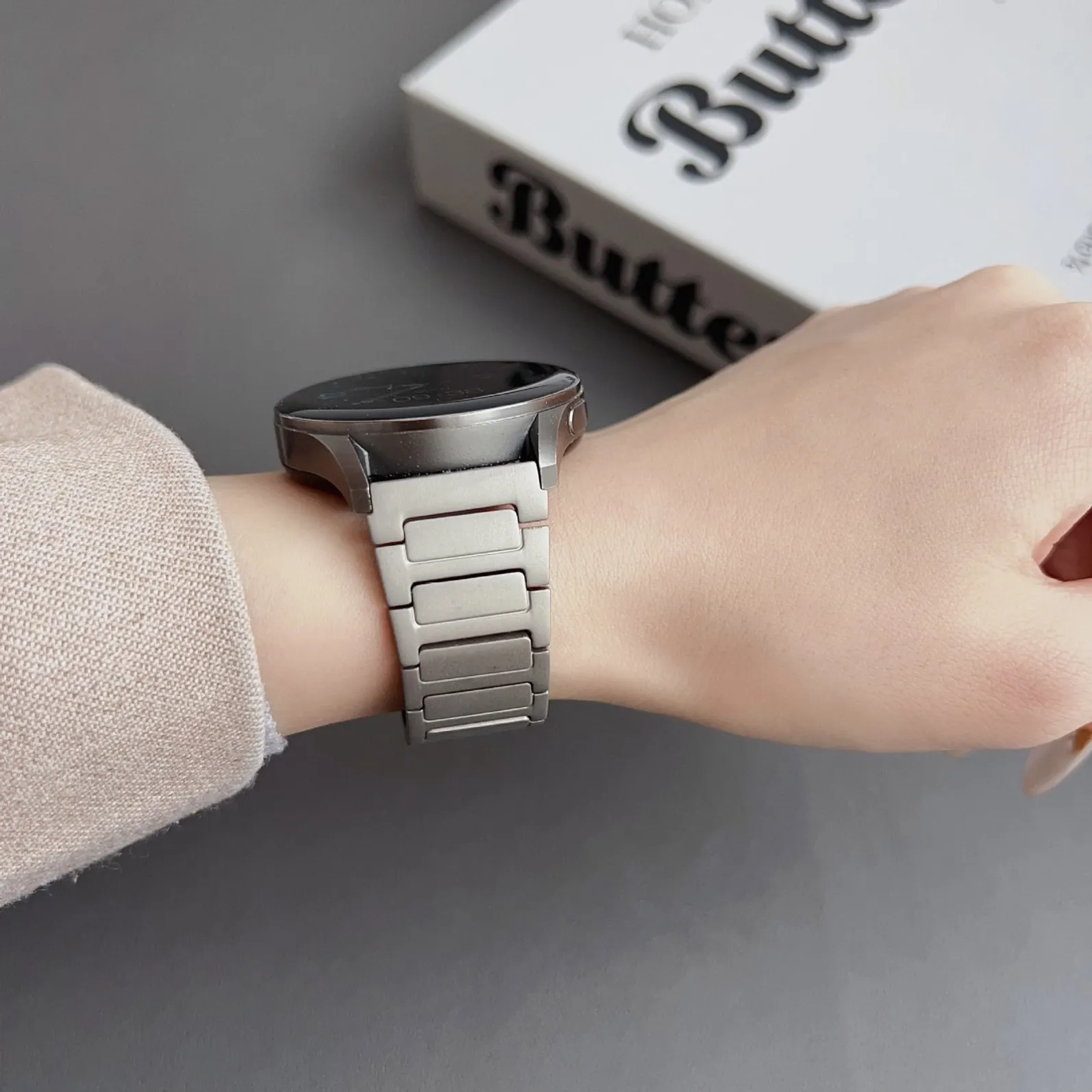
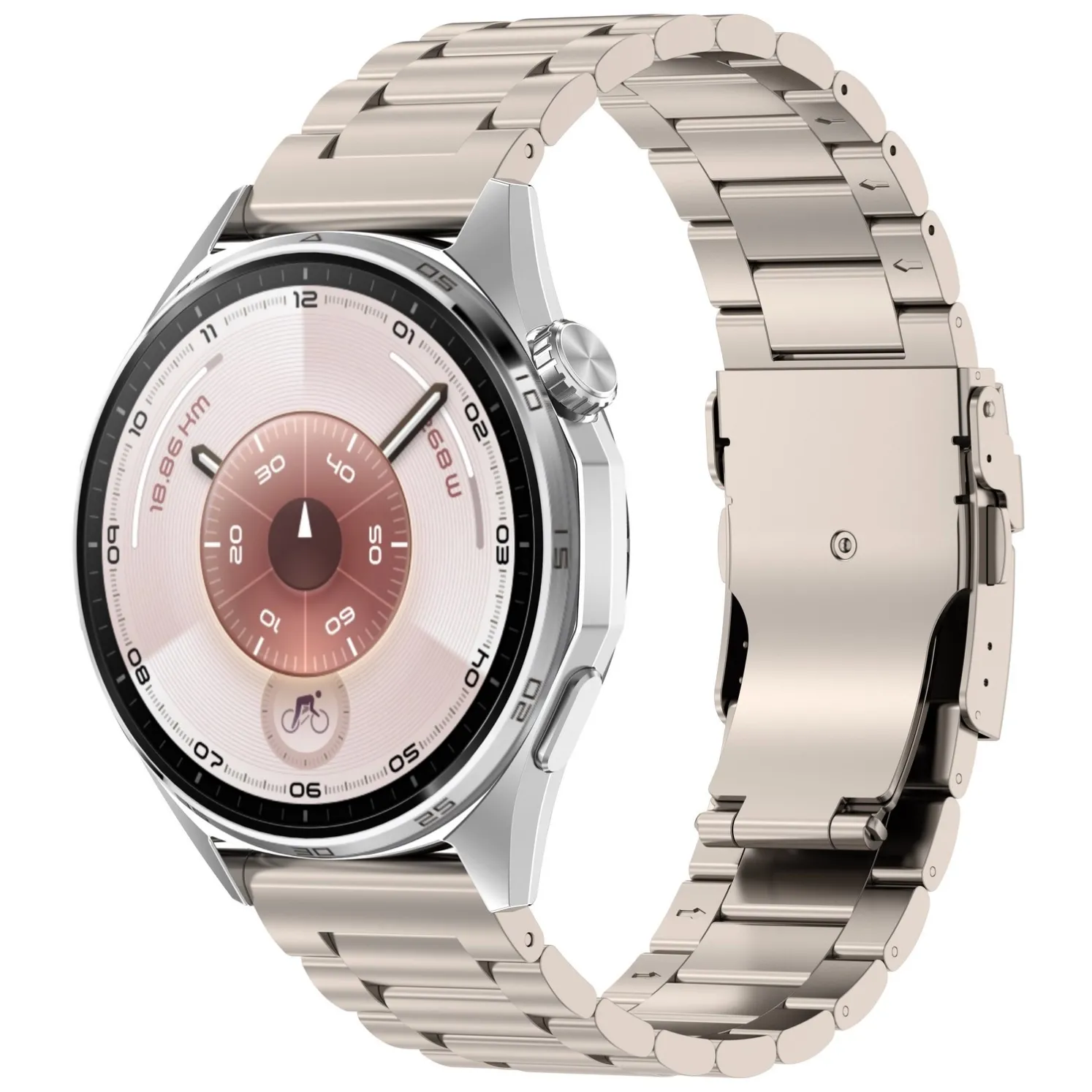
For wholesale buyers, the choice is simple: titanium bands weigh about 40% less and resist corrosion better, while stainless steel costs less and polishes brighter. This guide compares both materials on weight, strength, coating and cost so you can spec the right band.
Why the material decision matters at wholesale level
Retail buyers compare one band at a time. Wholesale buyers commit to a material across hundreds or thousands of pieces, so the decision affects unit cost, return rates, warranty claims and how the product can be positioned. A band that pits or discolours after contact with sweat generates returns that erase the margin on the whole order.
Titanium and stainless steel are the two standard metals for watch bands, and both are proven materials. The question for a buyer is not which one is better in general, but which one fits the watch, the price point and the end customer. The sections below work through the differences that matter most: weight, strength, corrosion resistance, finish, skin contact and cost.
Weight: the largest day to day difference
Titanium has a density of about 4.5 g/cm3. Stainless steel sits at about 7.8 to 8.0 g/cm3. At the same dimensions, a titanium band is therefore roughly 40% lighter than a steel band. On a small watch the difference is a few grams. On a large case with a full metal bracelet, it is the difference between a watch customers wear all day and one they take off by the evening.
Weight matters commercially in three ways. First, comfort drives reviews and repeat purchases for larger watches. Second, lighter bands reduce per carton shipping weight on bulk orders, which adds up across a container programme. Third, weight is easy to verify: a buyer can weigh a sample in ten seconds, so published weight figures for titanium bands need to be accurate.
If your line includes large cases or sport models, titanium has a clear story. If the product is a classic dress watch where a solid, heavy feel is part of the appeal, steel keeps that feel at a lower price.
Strength and durability in daily use
Band failures rarely happen in the link material itself. They happen at the clasp, the spring bars and the link pins, which is why engineering and testing matter as much as the choice of metal. Grade 1 titanium is a commercially pure titanium with moderate strength, and it performs well in bands when the clasp and link design are sound.
At Win-Win S&T, every titanium band design is checked against an internal pull test target of 120 N held for 5 seconds, tested on the long and short strap sections separately. The pass standard is strict: no loosening, no deformation and no breakage. When you evaluate samples, ask what load the clasp and links were tested to, and test the clasp cycle yourself: open and close it a few hundred times, check for play in the links, and confirm the safety flap still engages positively.
Stainless steel has a harder base surface and shrugs off knocks well, which is one reason it remains the default for price driven lines. Titanium trades some of that surface hardness for its weight advantage, and coating, covered below, closes most of that gap.
Corrosion resistance: sweat, water and salt air
Titanium forms a natural oxide layer on its surface the moment it meets air. That layer is stable and self repairing, and it is why titanium does not rust and stands up well to sweat, rain, seawater and humid storage. For bands sold into coastal markets, sport channels or warm climates, this means fewer corrosion complaints and less discolouration over the life of the product.
Our titanium bands have passed a 48 hour salt spray test under ASTM B117, the standard accelerated corrosion test used across the metal goods industry. When you compare suppliers, ask which standard was used and how many hours the sample ran. A claim without a standard and a duration is hard to rely on.
Stainless steel also resists corrosion well in normal use, which is why grades such as 316L are common in watchmaking. Its weak points are long exposure to salt water and chlorinated water without rinsing, where pitting can appear over time. For indoor and office use, both materials are more than adequate; the difference shows up in sport, marine and high humidity use.
Finish and coating: where each metal looks its best
Stainless steel is easier to polish to a bright mirror finish, and it holds that finish at low cost. If your product photography depends on a high shine dress look, steel is the straightforward choice. Titanium has a naturally warmer, slightly grey tone and is usually supplied brushed or bead blasted. That subdued look suits sport and tool watches, but it will not match the mirror brightness of polished steel.
Surface hardness is where coating changes the comparison. Our titanium bands use a DLC coating with a hardness of HV600 to HV1000, well above the base metal. DLC improves scratch resistance on the visible surfaces and allows darker finishes that uncoated titanium cannot offer. When you spec a coated band, confirm the coating type, the hardness range and which parts are coated, because clasps and inner links are sometimes left uncoated.
For samples, check the finish under bright light at an angle: even colour across links, clean edges at the clasp, and no coating build up in the link gaps.
Skin contact and nickel sensitivity
Titanium is nickel free, and it is considered hypoallergenic for most wearers. For buyers whose customers report irritation from metal bands, titanium is the standard recommendation, and it gives a retail line a clear, factual selling point for sensitive skin. Stainless steel grades used in watch bands contain nickel as part of the alloy. Most wearers have no reaction at all, but a share of customers do, and those customers tend to return products.
In markets with strict compliance habits, material declarations matter. Win-Win S&T products are covered by RoHS and REACH documentation, and the factory holds ISO 9001, EN71 and CE certification. Ask any supplier for the current documents.
Cost drivers: why titanium bands cost more
A titanium band costs more than the same design in steel, and the difference comes from identifiable inputs rather than branding. Titanium raw material is more expensive per kilogram than stainless steel. It is also harder on tooling: cutting, drilling and polishing titanium wears tools faster and runs slower, which raises machining cost per piece. Coating adds a further step when DLC is specified. Titanium bands also tend to run in smaller batches, so setup costs are spread over fewer pieces.
Two factors narrow the gap. Titanium's lower density means less material mass per band, and at wholesale volumes the machining and coating steps dominate the price more than the raw metal does. Buyers should therefore compare finished, coated, per piece prices at their real order quantity, not raw material prices. Ask for a tiered quote, and confirm whether coating and clasp type are included before comparing suppliers on price alone.
Side by side comparison
The table below summarises the differences covered above. Figures for our titanium bands are the confirmed production specifications; the steel column reflects standard 316L type bands.
Property | Titanium (Grade 1, TA1) | Stainless steel (316L type) |
|---|---|---|
Weight | About 4.5 g/cm3, roughly 40% lighter at the same size | About 7.8 to 8.0 g/cm3, noticeably heavier |
Corrosion resistance | Natural oxide layer, does not rust; 48 h salt spray passed (ASTM B117) | Good in normal use; can pit after long salt or chlorine exposure |
Hardness and coating | Softer base metal; DLC coating at HV600 to HV1000 | Harder base surface; polishes to a bright mirror finish |
Skin contact | Nickel free, hypoallergenic for most wearers | Contains nickel; a share of wearers react |
Cost | Higher material and machining cost | Lower material cost, faster to machine and polish |
Typical buyer | Premium, sport and large case lines; sensitive skin positioning | Price driven lines; classic dress watches |
Which buyers choose which
Titanium is usually chosen by brands selling larger watches, sport and outdoor models, or premium lines where low weight is part of the product story. It also suits programmes aimed at customers who have had skin reactions to steel, and markets where corrosion complaints are common. The higher unit cost is recovered through positioning: a titanium band supports a higher retail price and a clearer reason for it.
Stainless steel is usually chosen for price sensitive programmes, classic dress watches and designs that depend on a mirror polish. It is also the safer choice when an existing range is built around steel, because finishes will match across the catalogue.
Many wholesale buyers run both. Steel covers the entry and mid range, titanium covers the premium tier, and the two materials share clasps and packaging. If you are adding titanium for the first time, one or two proven designs in your best selling lug width will tell you quickly whether your customers respond to the lighter band.
What to check before you order titanium bands
Grade claims are the first thing to verify, because titanium grades differ in composition and price, and the grade cannot be judged by looking at a finished band. Our bands are Grade 1 titanium (TA1) only. The material composition was tested by SGS Guangzhou in report number GZHL2402006343JW, dated 29 February 2024, and conforms to GB/T 3620.1-2016 grade TA1. Ask any titanium supplier which grade they supply and what test documentation supports it.
Then work through a short sample checklist:
- Weigh the sample and compare it with the quoted figure.
- Run the clasp through repeated open and close cycles and check for play.
- Check link movement and edge finishing under bright light.
- Confirm the coating type and hardness in writing if a coating is specified.
- Confirm lug width and end link fit on the actual watch case, not a similar one.
- Confirm the sampling fee, sampling time and bulk lead time before placing the sample order.
Our Grade 1 titanium range and wholesale terms
Win-Win S&T (Shenzhen) Co., Ltd. produces titanium bands at its Dongguan titanium facility: Factory 302, Building A, Industrial Park No.456 Yanglang Road, Dalingshan Town, Dongguan City, Guangdong Province, China. The current range covers 22mm universal bands and bands for Huawei GT5 Pro, Huawei Watch 4 Pro, Huawei Watch 5, Apple Watch and Samsung Galaxy Watch Ultra. The wider factory runs 10 production lines with 108 staff and a monthly capacity of 350,000 straps across materials.
Wholesale terms are set up for testing before committing. Custom orders start from 1 piece for standard custom work such as logo application. Sampling costs US$50 to 70 per design and takes 15 to 20 days. Standard bulk lead time is 10 to 20 days once a sample is approved.
Frequently asked questions
Is a titanium watch band really lighter than a stainless steel one?
Yes. Titanium has a density of about 4.5 g/cm3 against about 7.8 to 8.0 g/cm3 for stainless steel, so at the same dimensions a titanium band is roughly 40% lighter. The difference is small on a narrow band and clearly noticeable on a wide bracelet fitted to a large watch case.
Does titanium rust or corrode from sweat?
No. Titanium forms a stable oxide layer on its surface that protects the metal underneath, so it does not rust and handles sweat, rain and seawater well. Our titanium bands have passed a 48 hour salt spray test under ASTM B117. Rinsing after heavy salt exposure is still good practice for the clasp and spring bars.
Which material is better for customers with sensitive skin?
Titanium is the safer choice. It is nickel free and hypoallergenic for most wearers. Stainless steel watch bands contain nickel in the alloy, and a share of wearers react to it. If your customers report irritation from metal bands, a titanium option gives them a workable alternative and reduces material related returns.
Why do titanium bands cost more than steel bands?
Three inputs drive the difference. Titanium raw material costs more per kilogram, machining it wears tooling faster and runs slower, and coatings such as DLC add a further process step. At wholesale quantities the machining and coating share is large, so compare finished per piece prices at your order quantity rather than metal prices.
How can I verify the titanium grade before a bulk order?
Ask for test documentation and check the grade named in it. Our bands are Grade 1 titanium (TA1), with composition tested by SGS Guangzhou in report GZHL2402006343JW dated 29 February 2024, conforming to GB/T 3620.1-2016 grade TA1. Then order samples, weigh them, and run your own clasp and finish checks before approving bulk production.
What are your minimum order quantity and sampling terms?
Custom orders start from 1 piece for standard custom work. Sampling costs US$50 to 70 per design and takes 15 to 20 days. Once a sample is approved, standard bulk lead time is 10 to 20 days. Send your lug width, case model and finish requirements and we will confirm the exact sampling cost for your design.
Request samples or a quote
If you are comparing titanium against steel for your next range, the fastest check is a sample. Send us the watch model, lug width and the finish you want, and we will quote the sampling cost and time for a Grade 1 titanium band made to that specification. Contact Oyasha, Senior Sales, at oyasha@customsmartjewelry.com or on WhatsApp at +86 134 2288 6491, or use the Get a Quote form on this site. Tell us the quantity you are planning, and the quote will include bulk price tiers for that design.